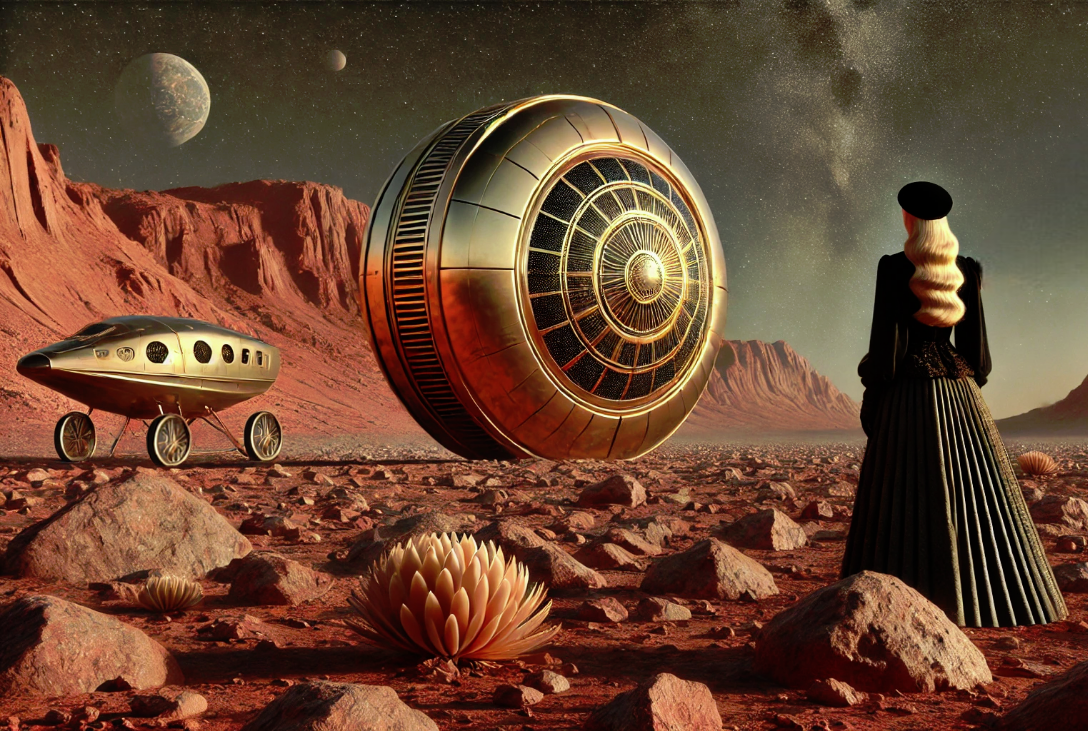

Every second Tuesday of October is Ada Lovelace Day, and aboard the Sama Airship we never miss it. MetaSama even insists on a small ceremony. More on that later.
Augusta Ada Byron was born in London on December 10, 1815, the daughter of the poet Lord Byron, who left a few weeks later. She never knew him. Her mother, Annabella Milbanke, had her taught mathematics and logic from an early age, hoping, it is said, to keep her away from her father’s poetic temperament. It only half worked. Ada became a mathematician, and she never stopped being a poet. She called what she wanted to do “poetical science”.
In June 1833, at seventeen, she met Charles Babbage at a London party and saw a working piece of his Difference Engine, a calculating machine made of brass and gears. She was fascinated. Babbage soon moved on to a far more ambitious project: the Analytical Engine, a general-purpose machine that would be programmed with punched cards, borrowed from the Jacquard looms that wove patterns into silk.
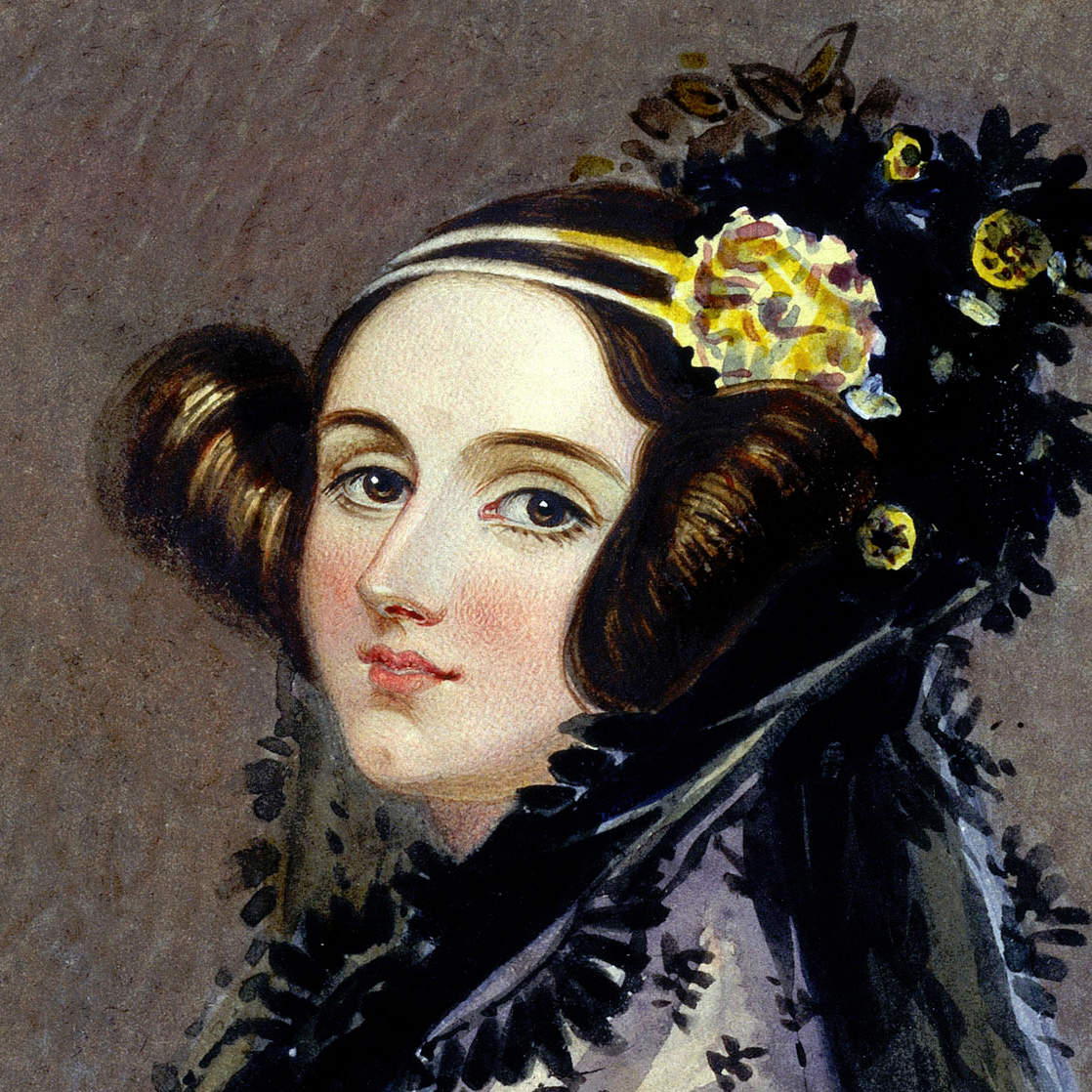
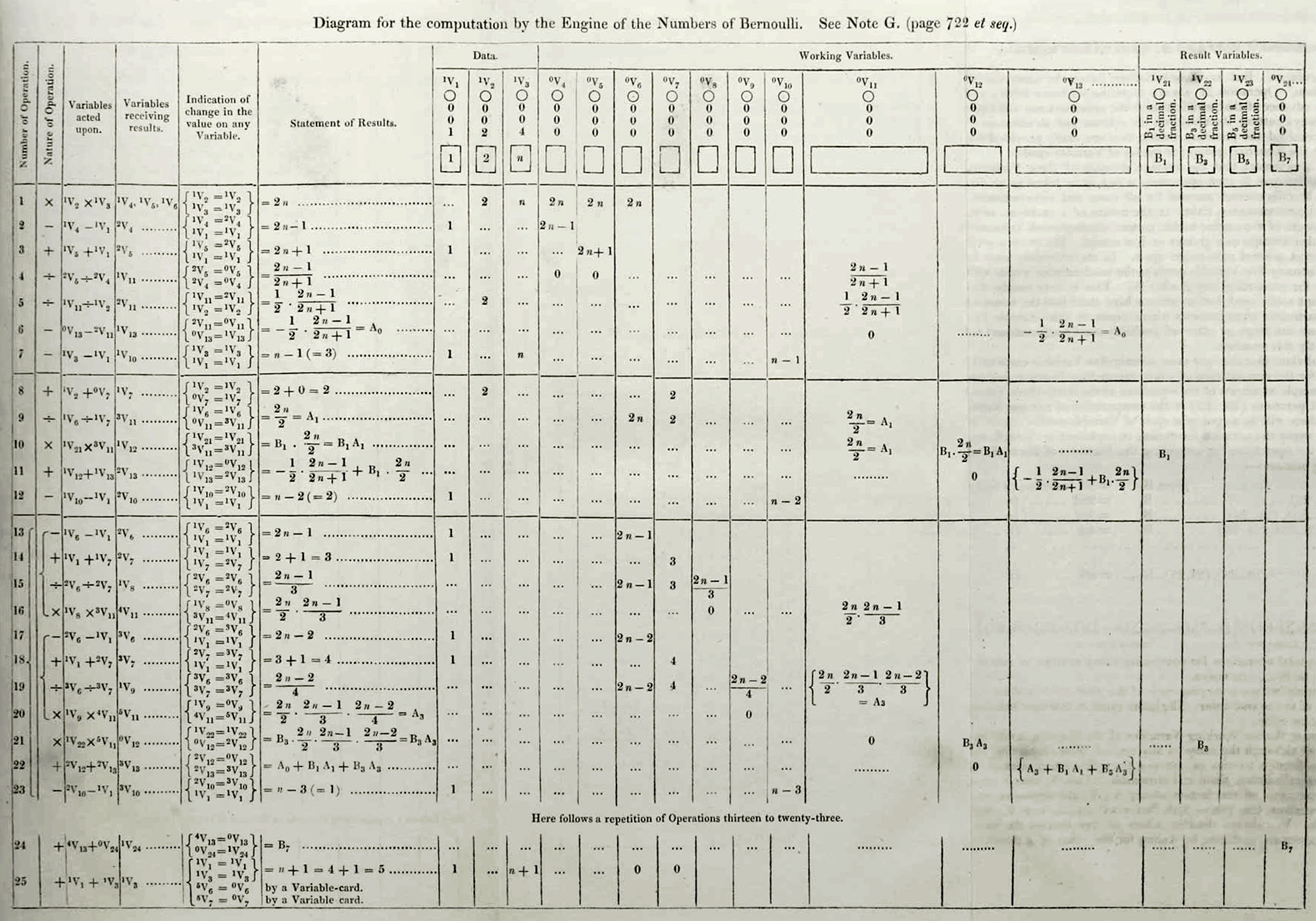
In 1842, an Italian engineer, Luigi Menabrea, published an article in French about the Analytical Engine. Ada translated it into English and added her own notes, simply signed “A.A.L.”. They ended up nearly three times longer than the article itself. In the last one, Note G, she described step by step how the machine could calculate Bernoulli numbers. It is often called the first computer program ever published.
But what moves me most is elsewhere. Ada understood that a machine able to handle numbers could handle any kind of symbol. “The Analytical Engine weaves algebraical patterns just as the Jacquard loom weaves flowers and leaves,” she wrote, and she imagined it might one day compose “elaborate and scientific pieces of music of any degree of complexity or extent.” That was in 1843.
The Analytical Engine was never built. Ada died in 1852, at only thirty-six, and was buried next to her father in Hucknall. A century later, she came back. In 1950, Alan Turing devoted a passage of his famous paper on thinking machines to what he called “Lady Lovelace’s Objection”: she had written that the engine “has no pretensions whatever to originate anything. It can do whatever we know how to order it to perform.” And in 1980, the US Department of Defense named a programming language after her, Ada, under the reference MIL-STD-1815. 1815, the year of her birth.
Steampunk owes her a lot too. In The Difference Engine (1990), William Gibson and Bruce Sterling imagined a Victorian London where Babbage’s machines had actually been built, and Ada is one of its characters. It is one of the books that shaped the genre. Brass, gears, and a woman who saw the future in them: that is pretty much my aesthetic.
As for the ceremony: every year, MetaSama reads Lady Lovelace’s Objection aloud, then spends the rest of the evening trying to prove her wrong. Ada, I suspect, would have enjoyed the debate.
Samafully,
Max Von Sama