
Antimatter and the Cosmic Coin Toss

I have been thinking about antimatter again. In June 2026, Elon Musk wrote on X that “a trillion times a trillion dollars” would one day be spent making antimatter to travel to other star systems, and NASA Administrator Jared Isaacman answered that he supports antimatter propulsion. I added my own two cents: aluminum was once rarer and more expensive than gold, until the right process and cheap energy made it abundant. Antimatter may follow a similar path. It is insanely expensive today, but history shows these patterns can repeat themselves, even if it takes centuries.

It is strange when you really stop to think about it. Every particle we know has a twin: same mass, opposite charge. The electron has its positron, the proton its antiproton. They are remarkable mirrors of one another. When they meet, they do not push or argue. They simply disappear together, turning their mass into a burst of energy. It is Einstein’s equation coming alive in one of the most spectacular ways nature allows.
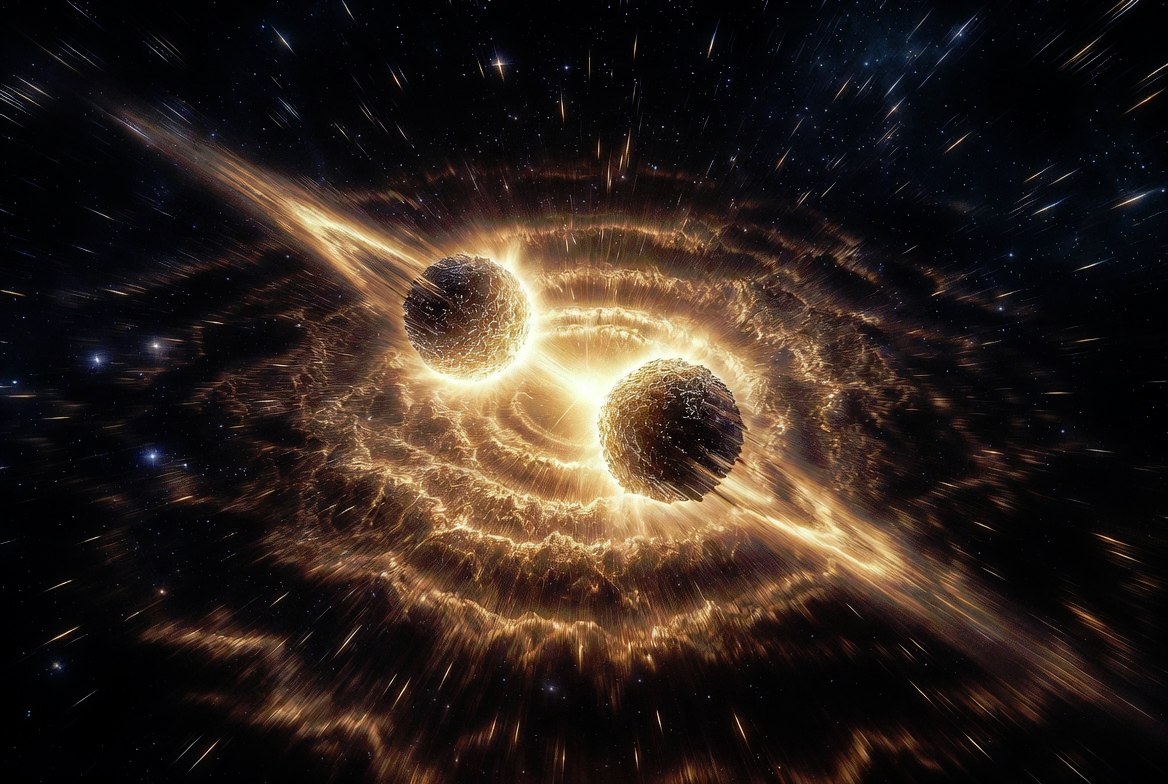
I remember reading the old papers years ago. Dirac’s equation of 1928 already hinted at these shadow particles, and in 1932 Anderson caught a positron in a cloud chamber, in the tracks left by cosmic rays. It felt like the universe had decided to share one of its quiet secrets with us.

But one question never quite leaves me. If the Big Bang created nearly equal amounts of matter and antimatter, as many of our best theories suggest, where did all the antimatter go? Why is the universe we can see and touch made almost entirely of ordinary matter?

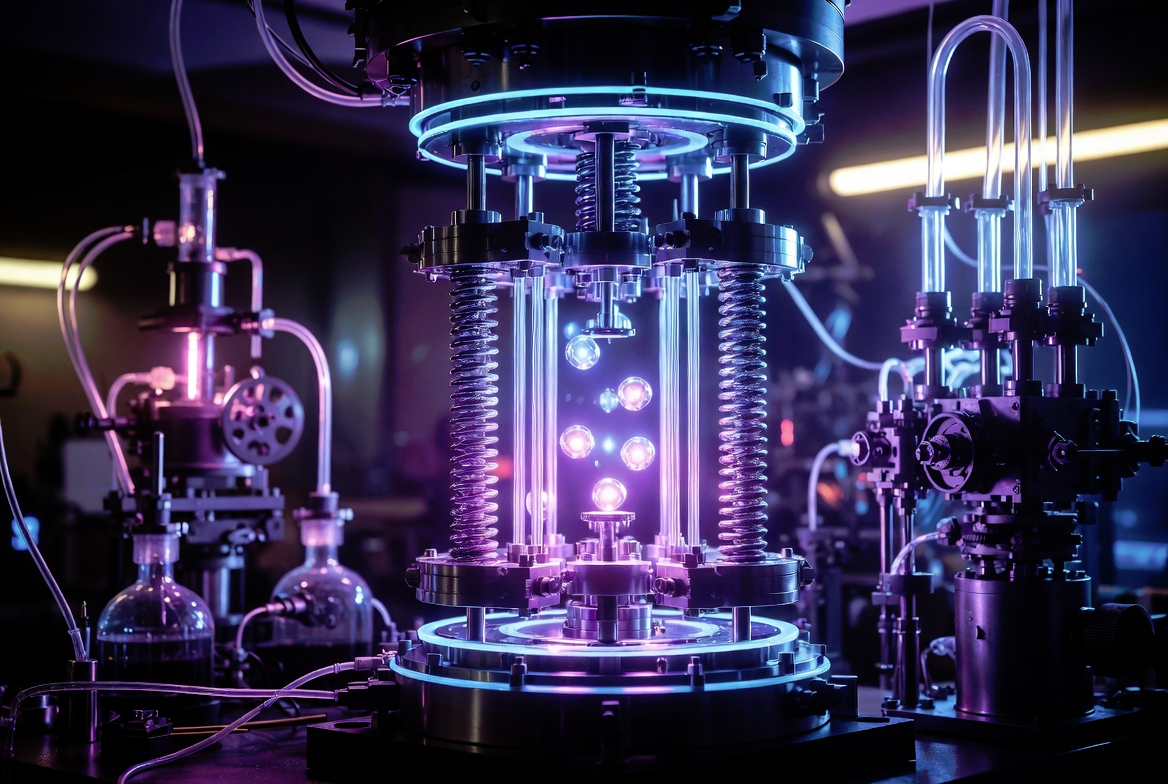
It is as if creation flipped a coin that landed ever so slightly in matter’s favor. We still do not fully know why. Teams at CERN produce tiny amounts of antihydrogen and hold it in magnetic fields so delicate that the slightest contact with ordinary matter would erase it in an instant.
Without that ancient imbalance, none of this would exist. No stars. No planets. No oceans catching the light at sunset. No one standing beneath the night sky, asking why the universe turned out this way. The simple fact that we are here means matter got to stay.

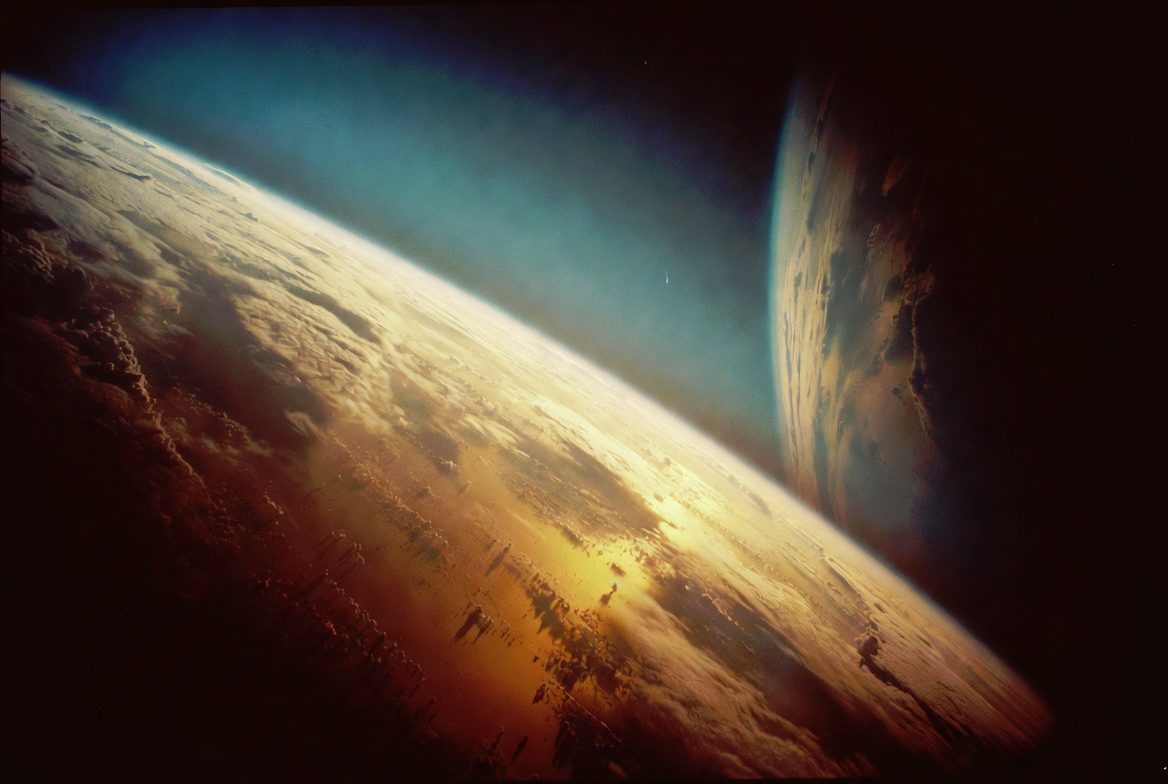
It always brings me back to the feeling I have when I look back at Earth from out here: a fierce, protective tenderness for our little blue world. It survived whatever that cosmic coin toss was. It got to become home.

What do you think, Samayans? When you look up at the night sky, do you ever feel there might be more to the story than what we can see right now?

Stay curious. Keep wondering.
Samafully,
Max Von Sama


First published on X by @MaxVonSama. Read the original article on X.

Artist Olek yarn-bombs Albert Einstein Memorial

Here is the link between Albert Einstein and crochet artist Olek: the National Academy of Science’s Albert Einstein Memorial has been covered in pink and purple crocheted fabric!

Sophie Gilbert, in her article published on The Washingtonian, explains:

Olek is in town for the Renwick Museum’s “40 Under 40: Craft Futures” exhibition, which features her as one of the most creative contemporary craft artists born since 1972 (when the Renwick was founded). Olek says Einstein, for her, was an easy choice since he was such a creative thinker himself. “I thought he might have a sense of humor about it,” she says. Sadly, DC didn’t—Olek’s work was removed within hours.

In March, Max Dana posted: Miss Van’s Dolls, tattooed and ‘crocheted’, showing the work done by Olek on Miss Van’s sexy characters with Olek’s work put on the face of a doll.

I like Olek’s work, you can follow her on Twitter and visit her website to learn more about the artist. Who would have known crochet could be so creative?

Neutrinos can’t beat speed of light

It is now official: neutrino researchers admit Albert Einstein was right.

Mark Brown, Wired UK, writes:

Back in September 2011, a team of particle physicists detected neutrinos moving faster than the speed of light as they traveled from CERN to the Gran Sasso lab. They smashed the universal speed limit by 60 nanoseconds — a result that was constant, even after 15,000 repetitions of the process. The results seem to run counter to a century’s worth of physics and would overturn Einsten’s special theory of relativity if true. As such, CERN called for more experiments to double-check the findings.

[…] At the International Conference on Neutrino Physics and Astrophysics in Kyoto on June 8, CERN research director Sergio Bertolucci presented results on the travel time of neutrinos from CERN to the INFN Gran Sasso Laboratory, on behalf of four experiments — Borexino, Icarus, LVD and Opera. All four experiments measured a neutrino time of flight that was below the speed of light, confirming that neutrinos respect Einstein’s cosmic speed limit. The previous anomaly was “attributed to a faulty element of the experiment’s fibreoptic timing system.”

If you don’t get why it would have been a big deal to prove Einstein’s theory wrong, a news on The Guardian explains it all:

Travelling faster than the speed of light goes against Albert Einstein’s theory of special relativity. If it were possible, it would open up the troubling possibility of being able to send information back in time, blurring the line between past and present and wreaking havoc with the fundamental principle of cause and effect.

 Now we know where we stand.