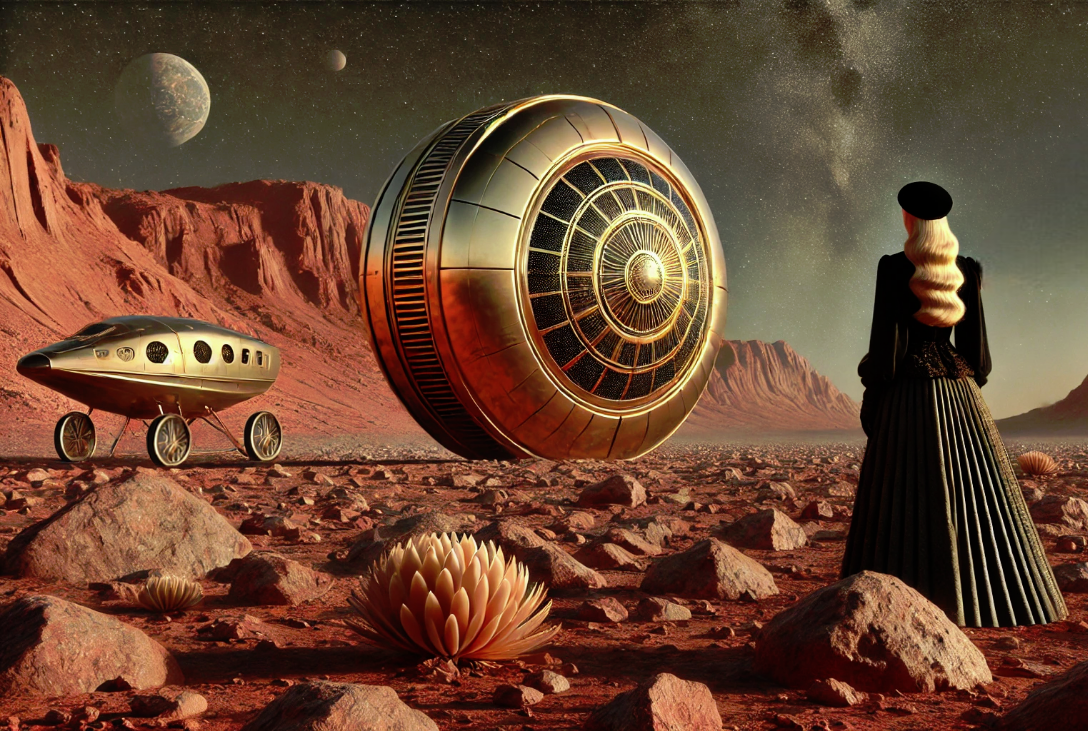

This morning I received a message from a Samayan friend: “Did you know a NASA spacecraft just hit a mysterious ‘wall’ at the edge of our Solar System?!? What does that mean?”
I replied: “Yes, I know… since 2012!” Here is my actual explanation.
You know that mental picture of the edge of the Solar System? Dark, freezing, silent. Almost lonely. Reality turned out to be a little different when Voyager 1 got there in 2012.
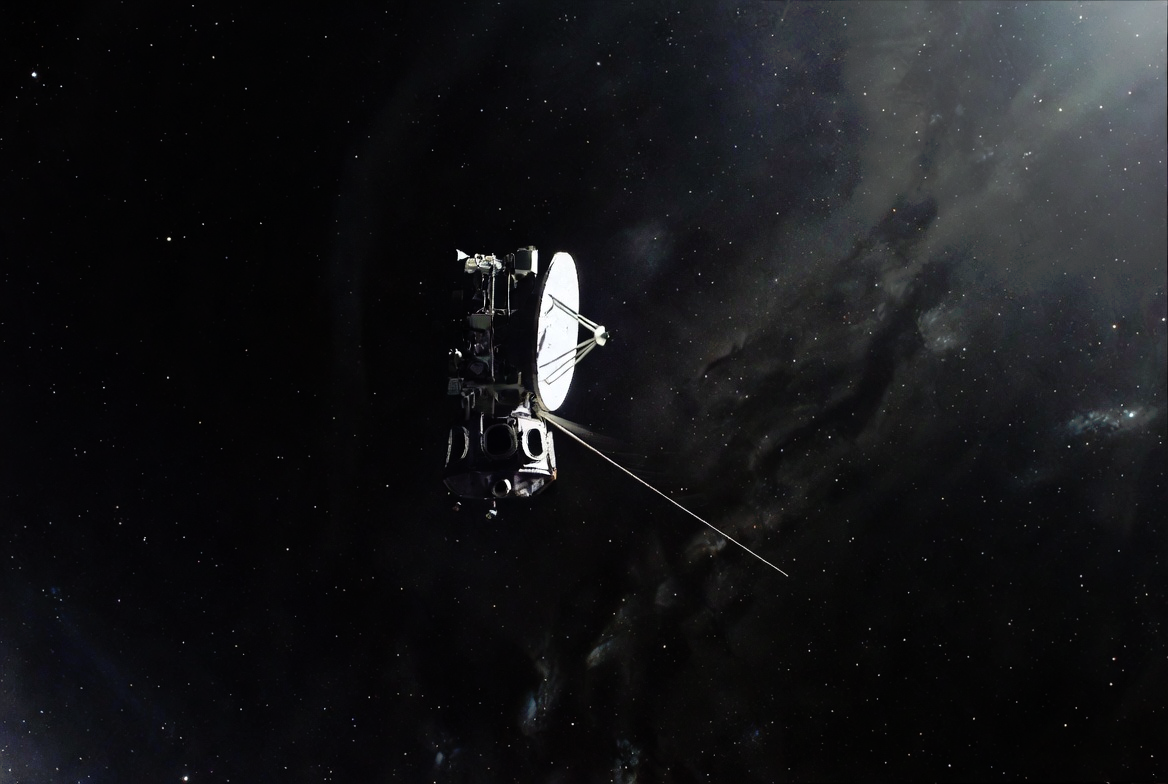
After 35 years in space, the probe crossed the heliopause, the boundary between the Sun’s protective bubble (the heliosphere) and interstellar space. There, it entered a region filled with extremely hot, thin plasma. Some headlines called it a “wall of fire.” It sounds dramatic, but the description is misleading.
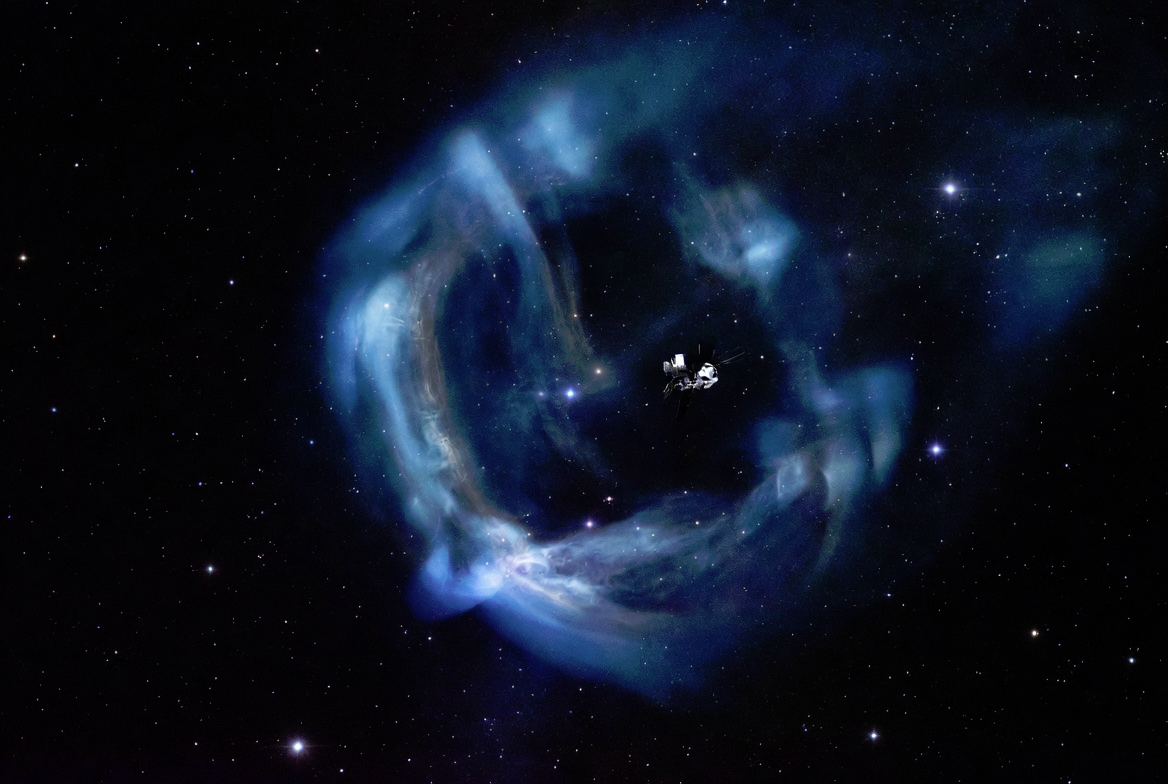
The particles in that region move incredibly fast, which gives the plasma a very high measured temperature, tens of thousands of degrees. Yet it is so thin, less than one particle per cubic centimeter, that almost no heat can actually be transferred. Voyager wasn’t scorched. It simply continued its journey, exactly as its engineers expected.
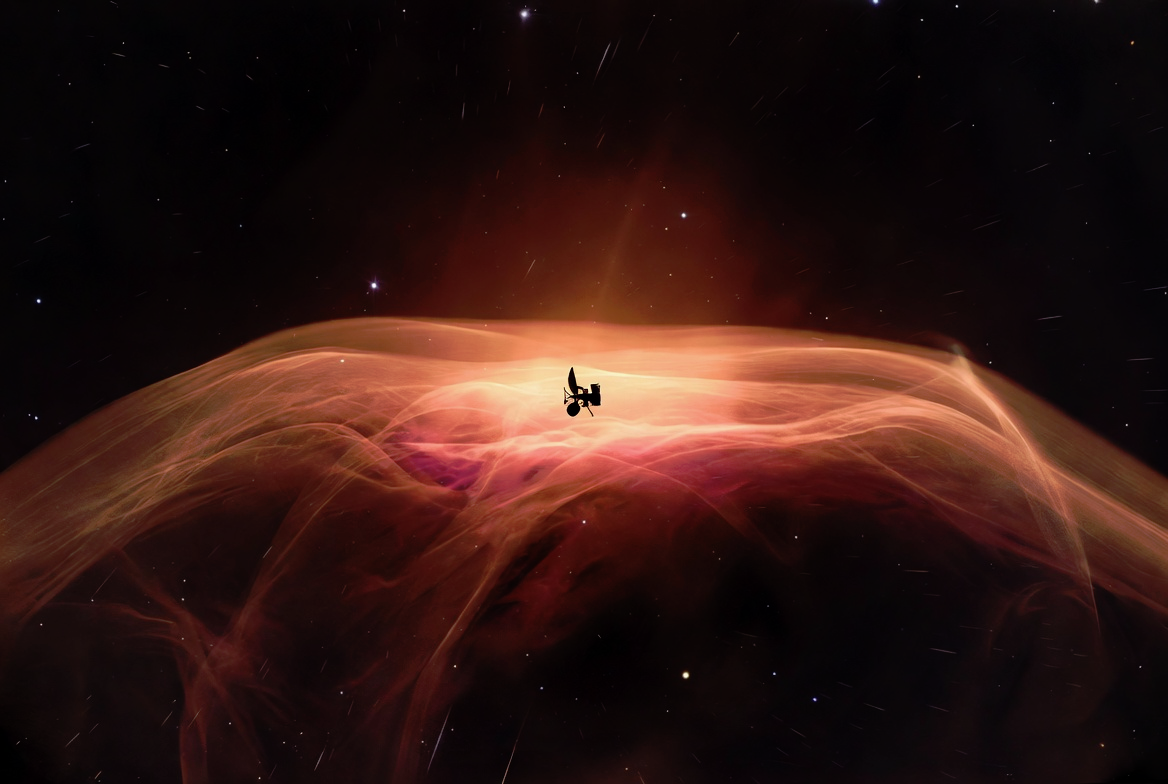
Think about that for a moment: a machine launched in 1977, built with 1970s technology, is now more than 25 billion kilometers (about 16 billion miles) from Earth. In November 2026, it reaches one full light-day away, the farthest any human-made object has ever traveled. It has left the region dominated by the solar wind and now moves through interstellar space. For the first time in history, we are directly sampling the environment between the stars.
And the wildest part? It is still talking to us.
The signal is incredibly weak and takes nearly a full day to arrive. Every command we send takes almost a day to reach it, and another day for the answer to come back. Yet Voyager 1 still sends data home with its two remaining instruments, the magnetometer and the plasma wave subsystem. It also still carries its famous Golden Record, with Chuck Berry, greetings in 55 languages and the sounds of Earth, like a message in a bottle drifting through the cosmic ocean.
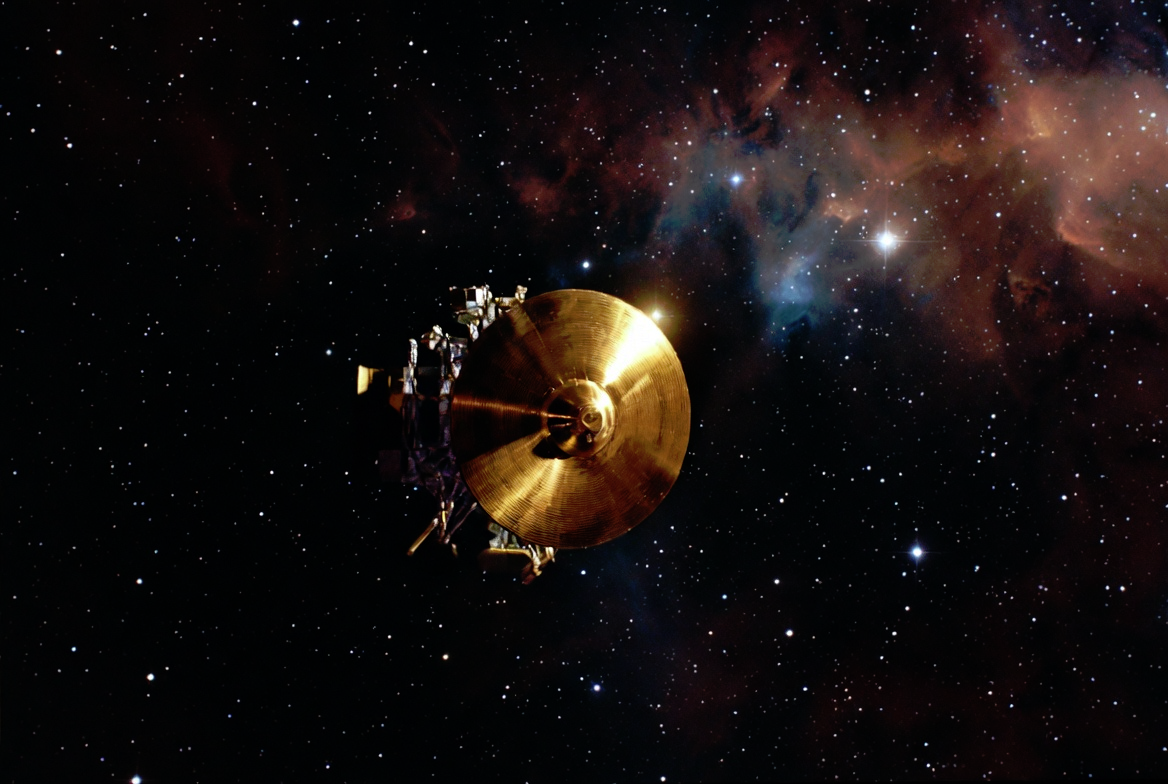
There’s something quietly badass about that. We are a small, curious species that built a machine sturdy enough to leave the Sun’s neighborhood, through decades of patient engineering and persistence.
Every time I think about Voyager, I remember that humanity has already placed something in interstellar space. Just barely, perhaps, but we’re out there. It makes you feel a little smaller, and a lot prouder.
Samafully,
Max Von Sama
First published on X by @MaxVonSama. Read the original article on X.