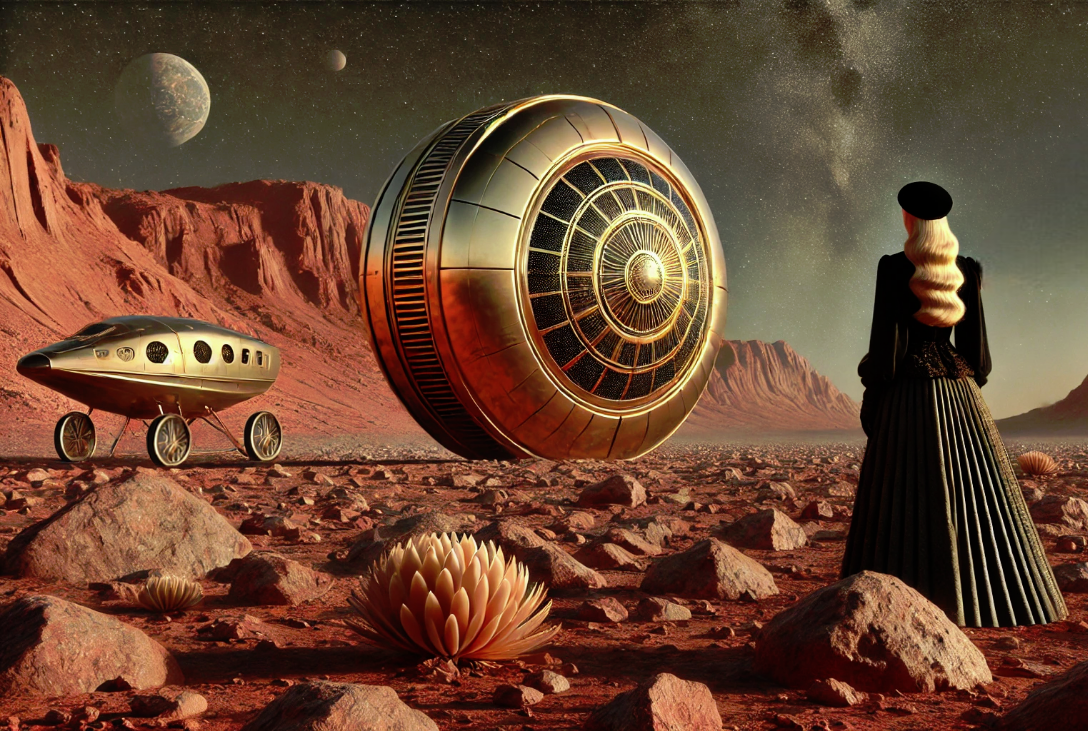

Every captain has a favorite instrument. Mine is more than two thousand years old.
Long before I borrowed it to find my way across the Many Worlds, the Antikythera mechanism lay at the bottom of the sea. Sponge divers found a Roman-era shipwreck off the Greek island of Antikythera in 1900, and over the following months brought up statues, glassware and coins. Among them was a corroded lump of bronze that nobody paid much attention to, until someone noticed a gear wheel in it in 1902.
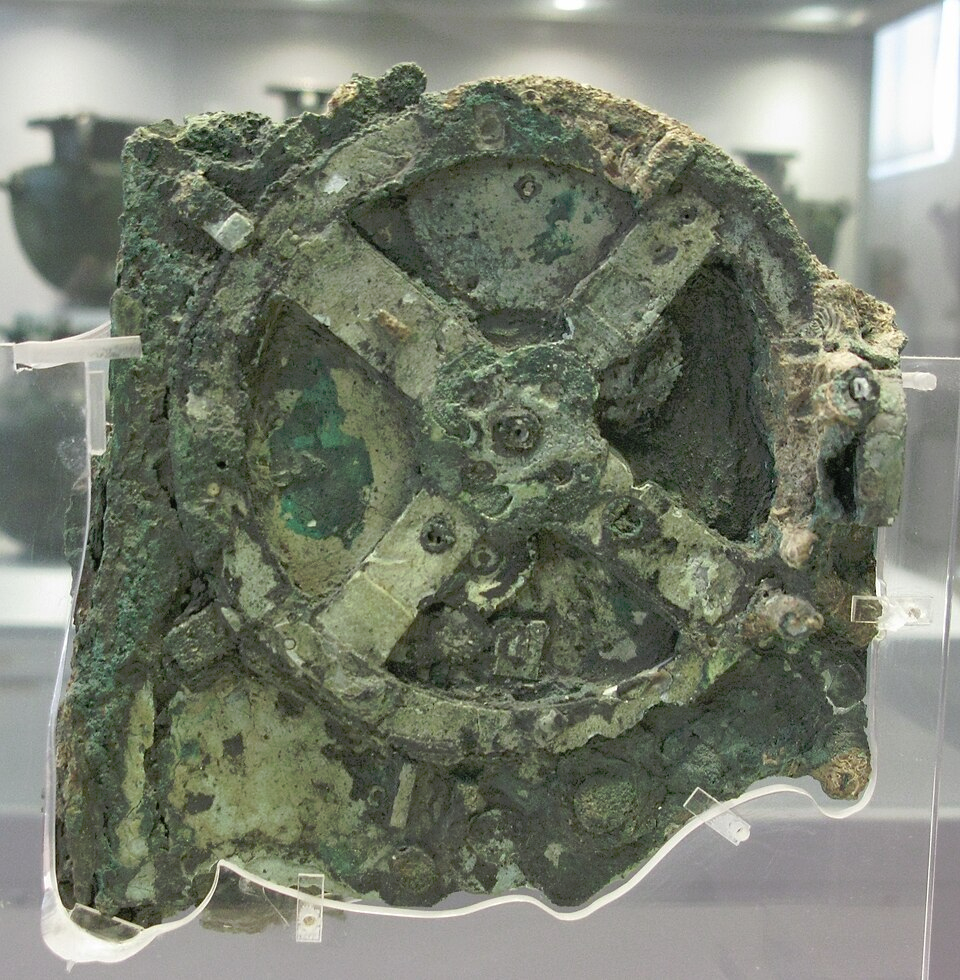
What is left today fits on a table: 82 fragments, kept in the National Archaeological Museum in Athens. But it took more than a century, and X-ray scanners, to understand what they once were. Inside a wooden case, dozens of bronze gears turned a set of dials. With a simple crank, you could follow the Sun and the Moon through the zodiac, see the phases of the Moon, predict eclipses years ahead, and keep track of the calendars of the time, down to the four-year cycle of the Olympic Games. Scans of the fragments even revealed tiny engraved texts, a kind of user manual.
The research has not stopped. In 2024, a team at the University of Glasgow used statistical methods borrowed from gravitational-wave astronomy to count the holes of a broken calendar ring. Their answer, about 354, matches the lunar year. In 2025, a computer simulation suggested the opposite kind of news: with gears as imprecise as the corroded fragments now appear, the mechanism would have jammed after a few months of predictions. Either its makers were more precise than we can measure today, or it never worked as well as we like to think. The study was released as a preprint, and the debate is very much alive.
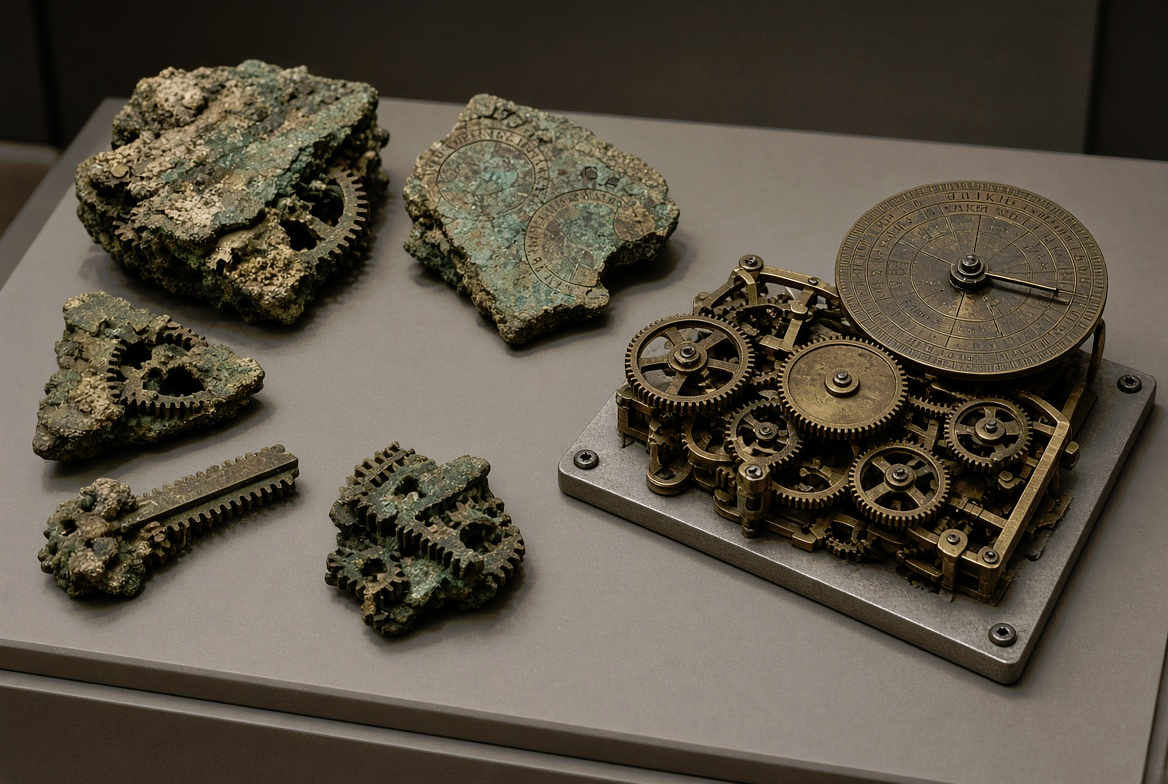
I’ll say this in its defense: mine has never jammed. MetaSama checks its gears before every long crossing. da-eYe Jr. once offered to “improve” it, and has not been allowed near it since.
Whatever the final answer, someone in the second century BCE looked at the sky, understood its cycles, and decided to put the heavens in a box. Two thousand years later, I still find that astonishing.
Samafully,
Max Von Sama
First published on X by @MaxVonSama. Read the original article on X.