
“Wall of fire”? Neither a wall nor fire.

This morning I received a message from a Samayan friend: “Did you know a NASA spacecraft just hit a mysterious ‘wall’ at the edge of our Solar System?!? What does that mean?”

I replied: “Yes, I know… since 2012!” Here is my actual explanation.

You know that mental picture of the edge of the Solar System? Dark, freezing, silent. Almost lonely. Reality turned out to be a little different when Voyager 1 got there in 2012.
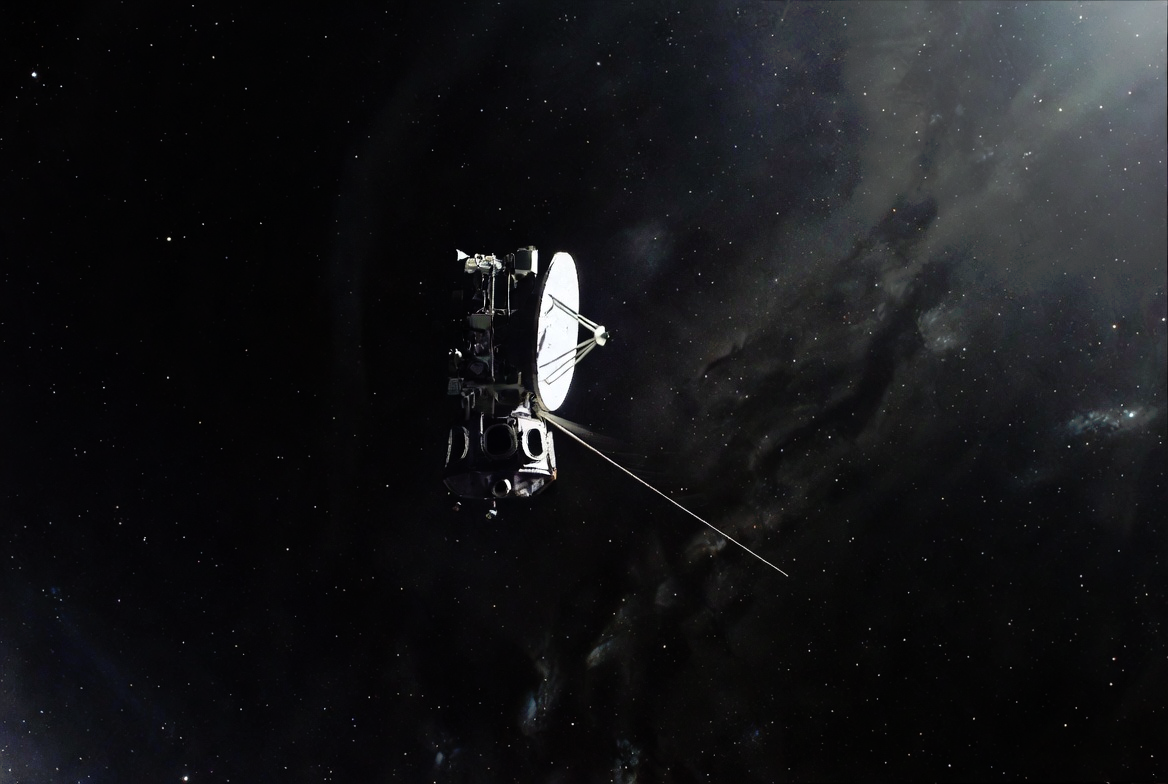
Voyager 1 drifting through the darkness of deep space

After 35 years in space, the probe crossed the heliopause, the boundary between the Sun’s protective bubble (the heliosphere) and interstellar space. There, it entered a region filled with extremely hot, thin plasma. Some headlines called it a “wall of fire.” It sounds dramatic, but the description is misleading.
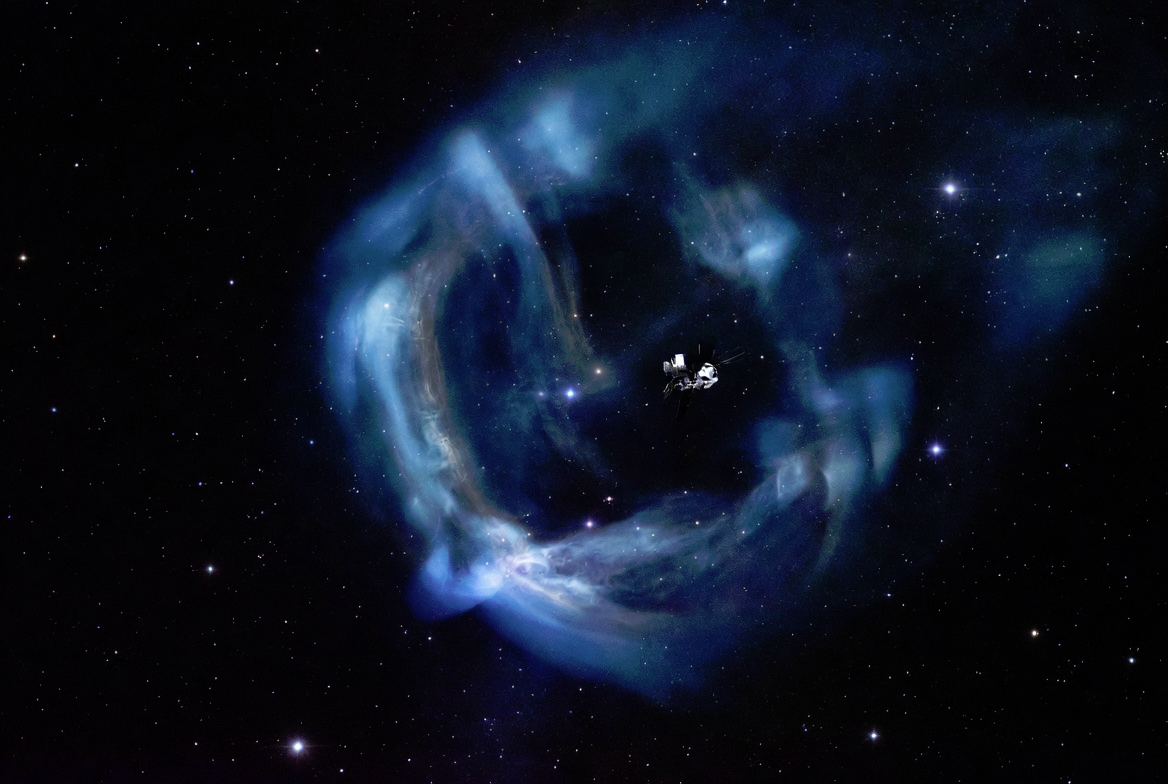
Voyager 1 crossing the heliopause, the edge of the Sun's bubble

The particles in that region move incredibly fast, which gives the plasma a very high measured temperature, tens of thousands of degrees. Yet it is so thin, less than one particle per cubic centimeter, that almost no heat can actually be transferred. Voyager wasn’t scorched. It simply continued its journey, exactly as its engineers expected.
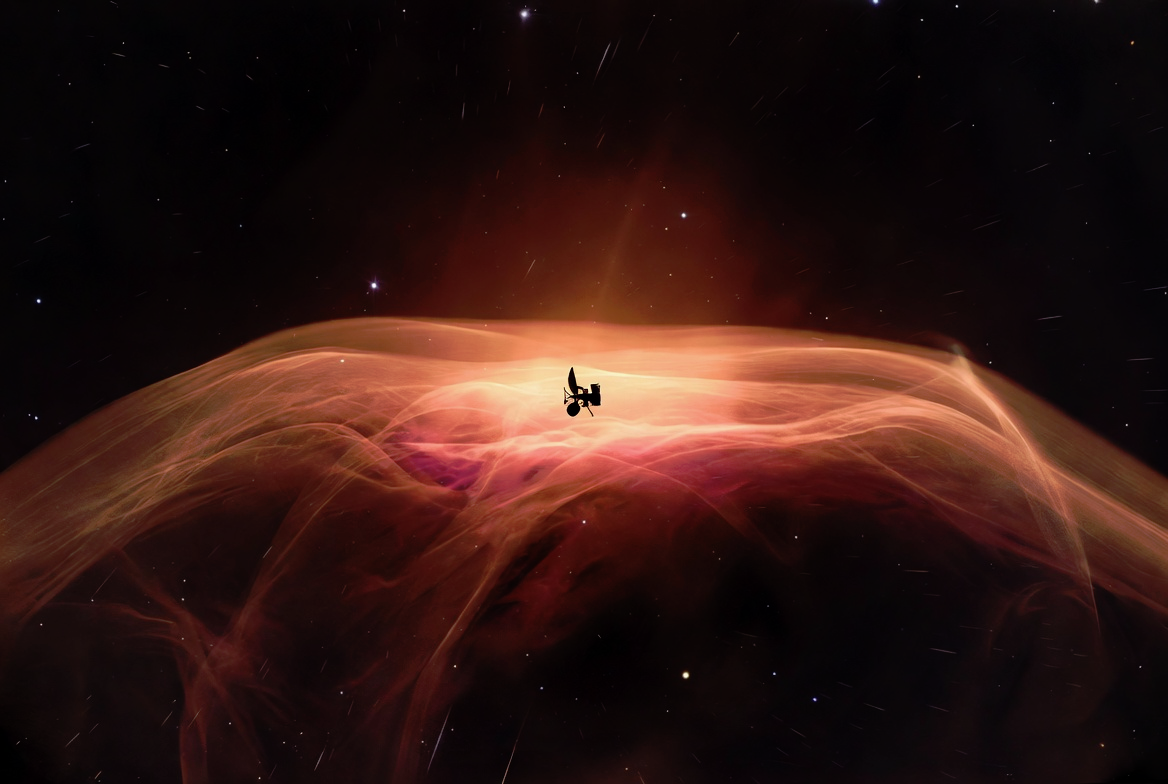
Voyager 1 passing through the hot, thin plasma beyond the heliopause

Think about that for a moment: a machine launched in 1977, built with 1970s technology, is now more than 25 billion kilometers (about 16 billion miles) from Earth. In November 2026, it reaches one full light-day away, the farthest any human-made object has ever traveled. It has left the region dominated by the solar wind and now moves through interstellar space. For the first time in history, we are directly sampling the environment between the stars.

And the wildest part? It is still talking to us.

The signal is incredibly weak and takes nearly a full day to arrive. Every command we send takes almost a day to reach it, and another day for the answer to come back. Yet Voyager 1 still sends data home with its two remaining instruments, the magnetometer and the plasma wave subsystem. It also still carries its famous Golden Record, with Chuck Berry, greetings in 55 languages and the sounds of Earth, like a message in a bottle drifting through the cosmic ocean.
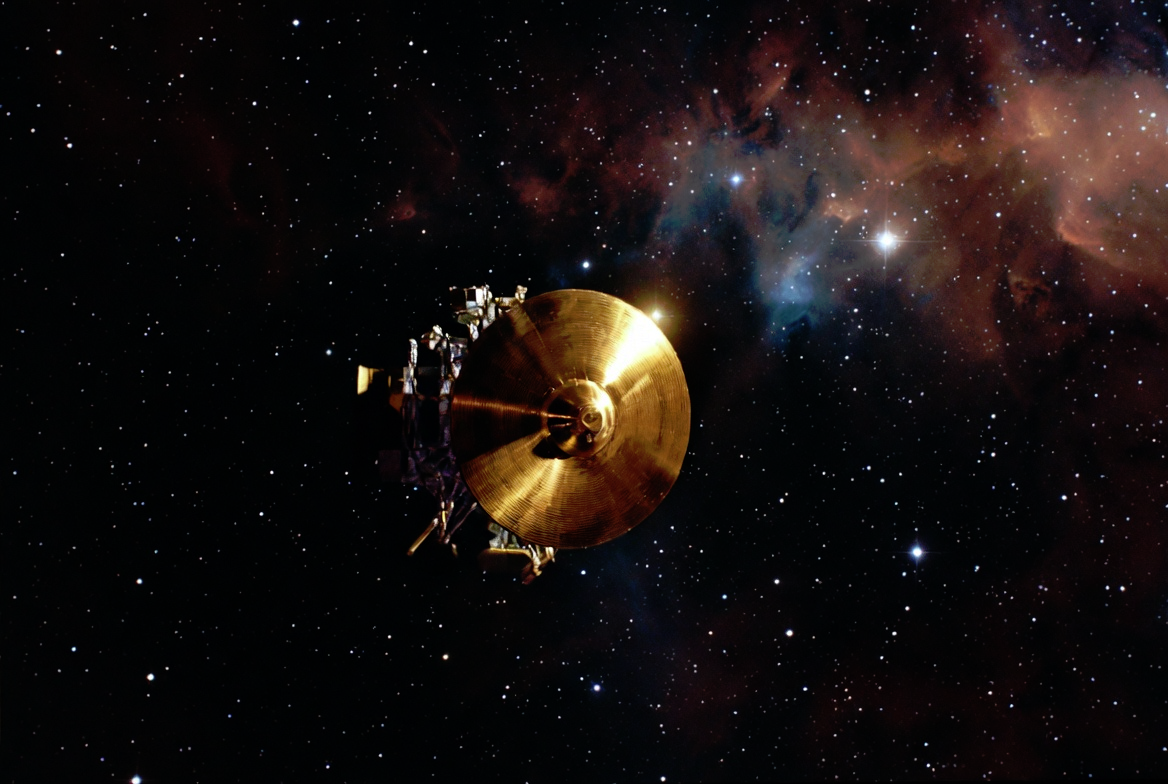
Voyager 1 and its Golden Record in interstellar space

There’s something quietly badass about that. We are a small, curious species that built a machine sturdy enough to leave the Sun’s neighborhood, through decades of patient engineering and persistence.

Every time I think about Voyager, I remember that humanity has already placed something in interstellar space. Just barely, perhaps, but we’re out there. It makes you feel a little smaller, and a lot prouder.

Samafully,
Max Von Sama

First published on X by @MaxVonSama. Read the original article on X.

Space Exploration Technologies (SpaceX) has launched!

Yesterday, I witnessed something amazing while orbiting Earth: Space Exploration Technologies (SpaceX) successfully launched its Falcon 9 rocket, carrying a Dragon spacecraft into orbit. This marked an exciting start to the mission that will make SpaceX the first commercial company in history to attempt sending a spacecraft to the International Space Station.

The Dragon spacecraft with solar panels deployed. Illustration: SpaceX

At a press conference held after the launch, SpaceX CEO and Chief Designer Elon Musk began, “I would like to start off by saying what a tremendous honor it has been to work with NASA. And to acknowledge the fact that we could not have started SpaceX, nor could we have reached this point without the help of NASA… It’s really been an honor to work with such great people.” The vehicle’s first stage performed nominally before separating from the second stage. The second stage successfully delivered the Dragon spacecraft into its intended orbit. This marks the third consecutive successful Falcon 9 launch and the fifth straight launch success for SpaceX. “We obviously have to go through a number of steps to berth with the Space Station, but everything is looking really good and I think I would count today as a success no matter what happens with the rest of the mission,” Musk said.

The Dragon spacecraft at the International Space Station. Illustration: SpaceX

He continued by expressing his gratitude to the more than 1,800 SpaceX employees. “People have really given it their all.” Describing the scene inside of SpaceX headquarters in Hawthorne, California, he said, “We had most of the company gathered around SpaceX Mission Control. They are seeing the fruits of their labor and wondering if it is going to work. There is so much hope riding on that rocket. When it worked, and Dragon worked, and the solar arrays deployed, people saw their handiwork in space operating as it should. There was tremendous elation. For us it is like winning the Super Bowl.”

Explaining the significance of the day, Musk stated, “This mission heralds the dawn of a new era of space exploration, one in which there is a significant commercial space element. It is like the advent of the Internet in the mid-1990s when commercial companies entered what was originally a government endeavor. That move dramatically accelerated the pace of advancement and made the Internet accessible to the mass market. I think we’re at a similar inflection point for space. I hope and I believe that this mission will be historic in marking that turning point towards a rapid advancement in space transportation technology.”

You can read the NASA Space Launch Report: SpaceX Falcon 9 Data Sheet and watch a video on PBS here.

I will keep an eye on SpaceX for you 🙂